More channels do not automatically mean a connected experience. Start with one customer journey, preserve the context that matters, and measure the result.
Why does the customer have to explain the same problem again?
A customer starts a conversation with your company on WhatsApp, calls to get an answer, then sends an email to complete the request. At every stage, they may have to explain the problem again, find an order number or resend information they have already provided.
For the business, these interactions may sit across different systems and teams. For the customer, they are one experience with your brand. This is where a connected, omnichannel customer experience matters.
What does omnichannel CX mean?
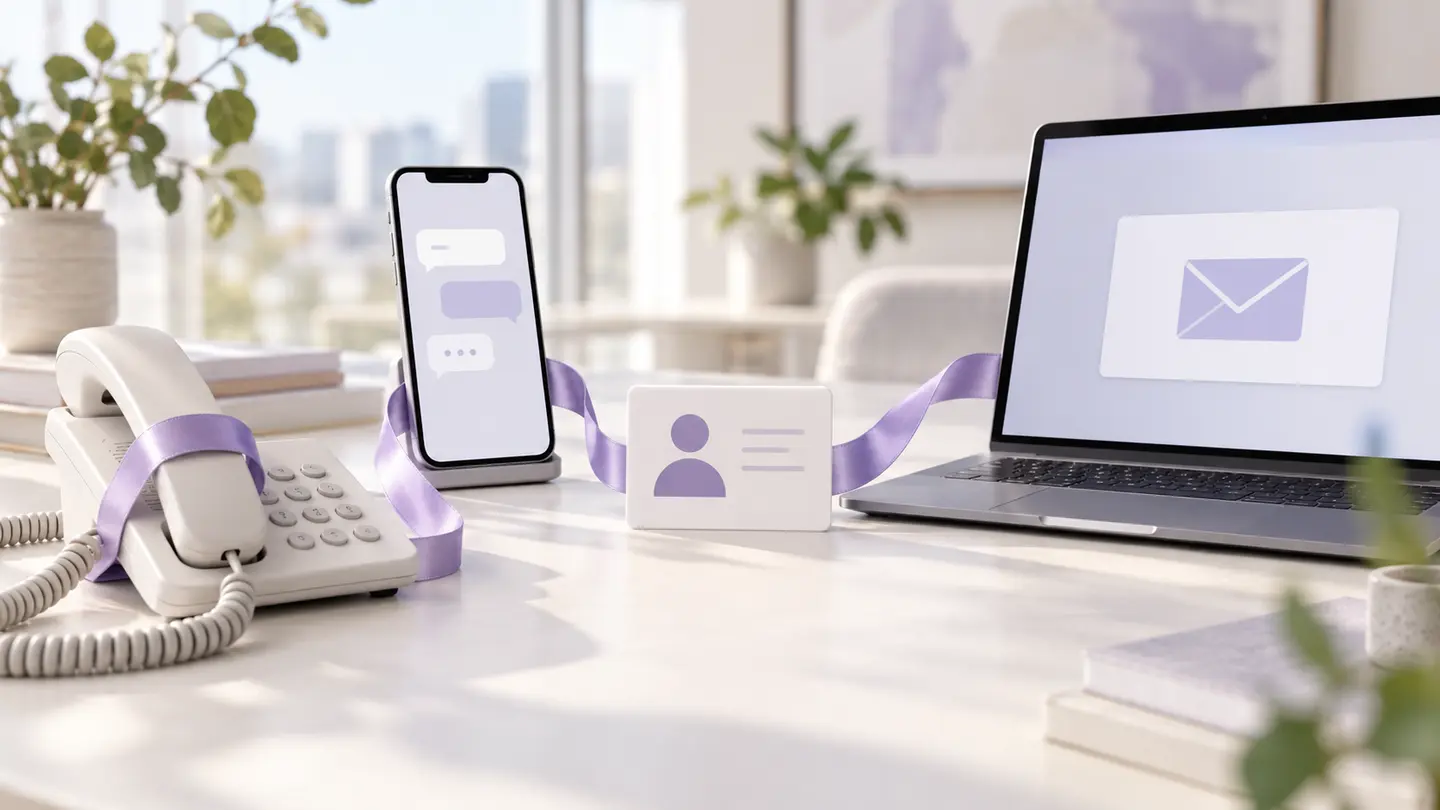
Omnichannel CX means designing an integrated experience that lets customers move between communication channels while retaining relevant information and context. Those channels include:
- Phone calls and voice systems, including IVR.
- WhatsApp.
- Live chat on your website.
- Email.
- Social media.
- Interactions with human staff and AI-powered agents.
The goal is not simply to offer many channels. It is to make moving between them smoother for both the customer and the team helping them.
What is the difference between multichannel and omnichannel?
This distinction is fundamental when choosing a customer experience platform.
Swipe horizontally to see the full comparison.
| Aspect | Multichannel | Omnichannel |
|---|---|---|
| Channels | Several channels are available | Several channels are connected |
| Interaction data | May remain scattered across systems | Aims to connect context and relevant information |
| Moving between channels | Customers may need to repeat details | Repetition can be reduced when the system supports context continuity |
| Teamwork | Each team may work with separate tools | Can support a more connected view of customer interactions |
| The goal | Offer several ways to get in touch | Deliver a connected experience across those channels |
Having WhatsApp, a contact center and email does not automatically make a company omnichannel. What matters is how information moves between those channels and systems.
Five signs your communication channels are disconnected
- Customers repeat their information. If a customer explains a problem on WhatsApp and then has to explain it again over the phone, conversation context may not be carrying across. Repetition takes up the customer's time and adds work for staff.
- Staff cannot see previous interactions. A salesperson may receive an enquiry without knowing that the customer has already spoken to another team. Without relevant information, it becomes harder to give an accurate answer or suggest the right next step.
- Answers differ between channels. If a customer receives one answer in chat and a different one on the phone, information sources may be inconsistent or out of date. An approved source of information and a clear process for maintaining it can help reduce these conflicts.
- The customer journey is hard to see. A company may know how many calls and WhatsApp messages it receives, but struggle to understand how a customer moved between channels or where they stopped before completing a booking or purchase. Connecting available data helps make the journey clearer.
- The overall experience is hard to measure. Each channel may look effective on its own, while customers encounter difficulties moving between them. Measure the experience from the customer's perspective, not just through separate channel reports.
How can a business implement an omnichannel CX strategy?
Step one: map the customer journey
Identify how customers reach your business, the questions they ask, the channels they use and the steps they need to complete. Choose one clear journey, such as a service enquiry or an appointment booking, rather than trying to redesign every process at once.
Step two: decide which information needs to carry over
You do not need to collect every piece of information in every case. Identify what is necessary to continue the interaction: an order number, the reason for contacting you or steps already taken. Apply the appropriate permissions and data-protection policies.
Step three: connect priority channels and systems
You may need to integrate your communication platform with a CRM, ticketing or booking system. Check which channels are supported, how the integration works, and whether it transfers only messages or also preserves the context you need.
Step four: define when a person should step in
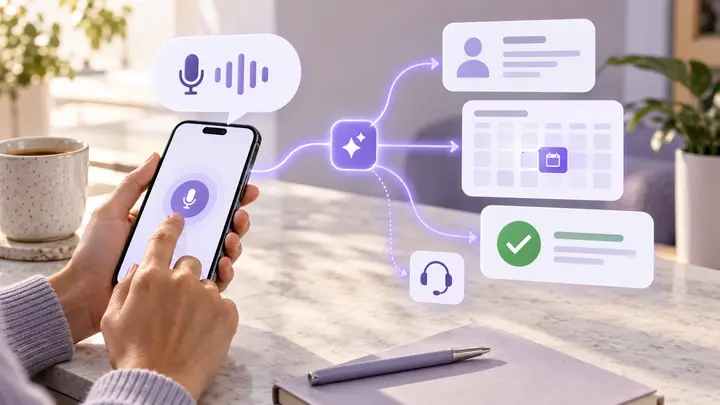
AI can handle specific tasks while staff take responsibility for complex or sensitive cases. Make the handoff clear to the customer and pass relevant information to the employee where the system supports it.
Step five: measure results continuously
Start with practical measures such as:
- How often customers have to explain the same problem again.
- Response time across channels.
- First-contact resolution rate.
- The number of transfers between teams.
- Customer satisfaction.
- Booking completion or enquiry-to-sales-opportunity conversion.
Collect a baseline before making changes, then compare it with results after implementation to understand what has actually improved.
Where does AdamX Connect fit in an omnichannel CX strategy?
AdamX Connect focuses on a connected layer for customer interactions across voice, WhatsApp, chat, email and social media, with context carried through rather than treating each channel as an isolated tool.
The underlying idea is that a business needs more than message and call management. It needs to understand each interaction as part of the customer's journey. That is different from simply putting channels on one dashboard. The value depends on how well information and processes connect, and how effectively staff and systems use the context available.
When evaluating any platform, ask: does it help us see customer interactions as a connected journey? Can it pass the information an employee needs when the customer changes channels?
The takeaway: start with one journey
Omnichannel customer experience is not just a technology project. It is a way of organising the customer journey so that people repeat less information, interactions are easier to follow, and teams can deliver a more consistent experience. Start with one journey, identify where it breaks down, then improve the connections between channels and systems based on the results.
Want to make your customer interactions more connected? Explore AdamX Connect and see how it could support your customer experience goals.